
From consolidation to compliance: XBRL reporting, now built into Jedox
For publicly listed companies, the financial close doesn’t end with consolidation. Once group financial statements are finalized, another critical step begins: regulatory disclosure in XBRL or iXBRL (eXtensible Business Reporting Language) format. This is where many Finance teams hit a wall. Data is pulled out of the consolidation system, then manually prepared, tagged externally, and submitted using third-party tools or consultants. This results in a fragmented process that slows everything down and increases risk and costs.
With the new XBRL reporting functionality in the Jedox Financial Close & Consolidation Solution (FCCS), that gap disappears. Finance teams can create validated XBRL and iXBRL reports directly within Jedox—fully integrated, efficient, and audit-ready.
New in the Jedox Financial Close & Consolidation Solution: Integrated XBRL reporting
With Jedox XBRL—powered by Semansys—XBRL reporting becomes a native part of your consolidation workflow in Jedox. Instead of manually exporting reports and submitting them through separate tools or external providers, the entire workflow takes place within the existing Jedox environment.
Key capabilities
Support for relevant taxonomies
Jedox XBRL reporting currently comes with the European Single Electronic Format (ESEF) taxonomy, as well as the Dutch taxonomy. Additional taxonomies, such as International Financial Reporting Standards (IFRS) and US Generally Accepted Accounting Principles (US GAAP) will be added over time. Since Semansys is supporting all taxonomies, they can also be implemented quickly upon customer request and then become available to all customers in the respective region.
Flexible mapping between chart of accounts and taxonomy
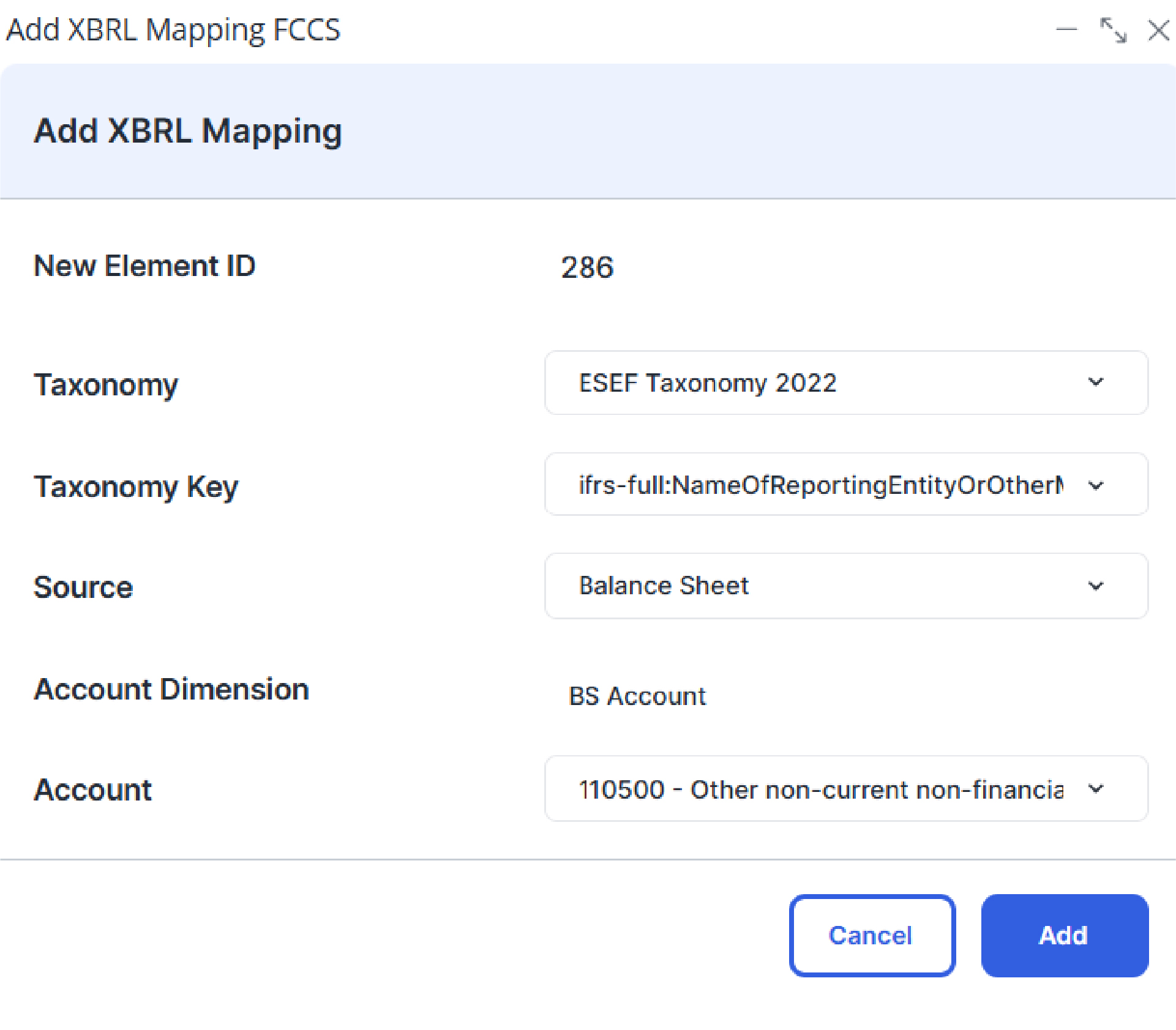
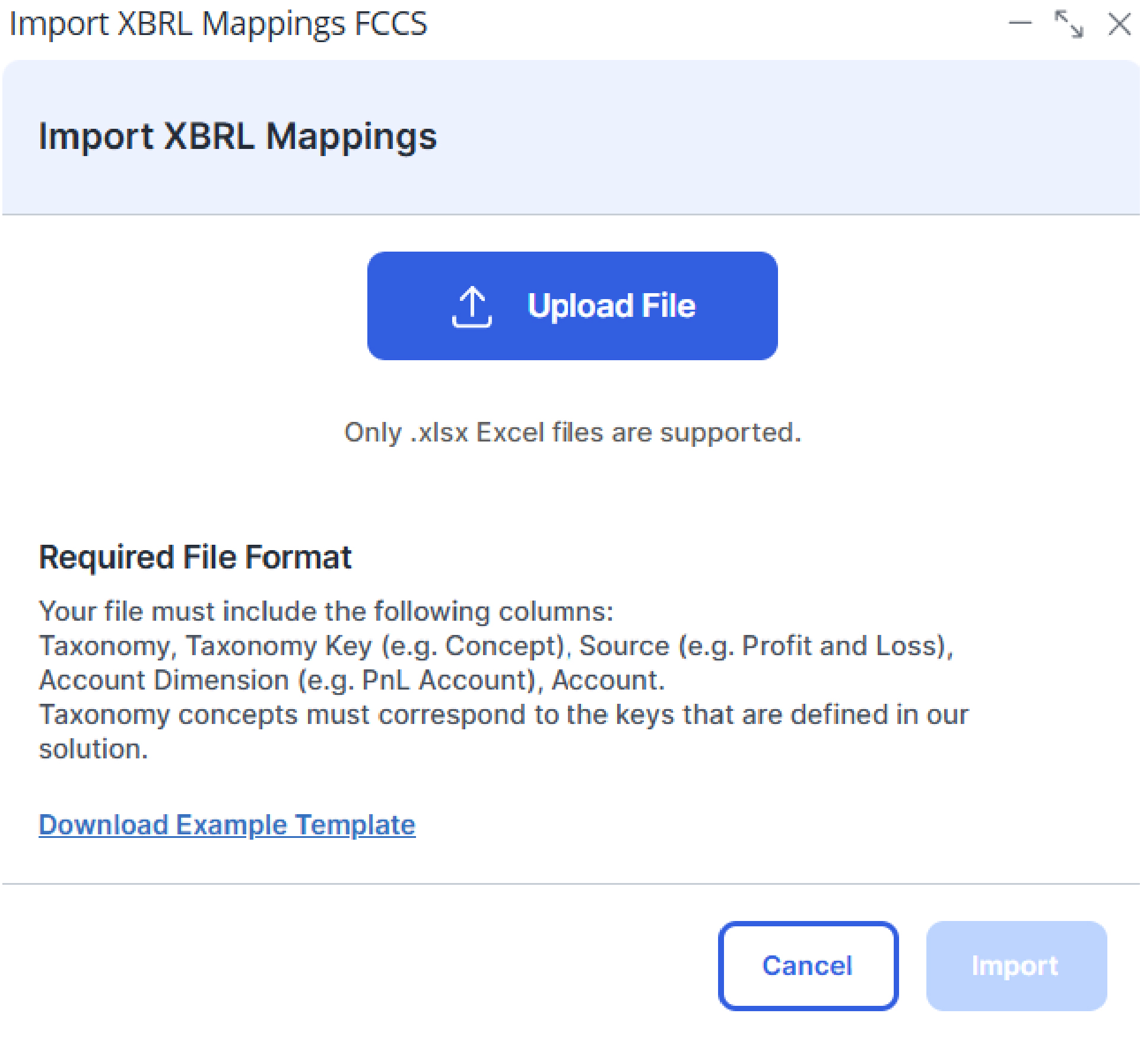
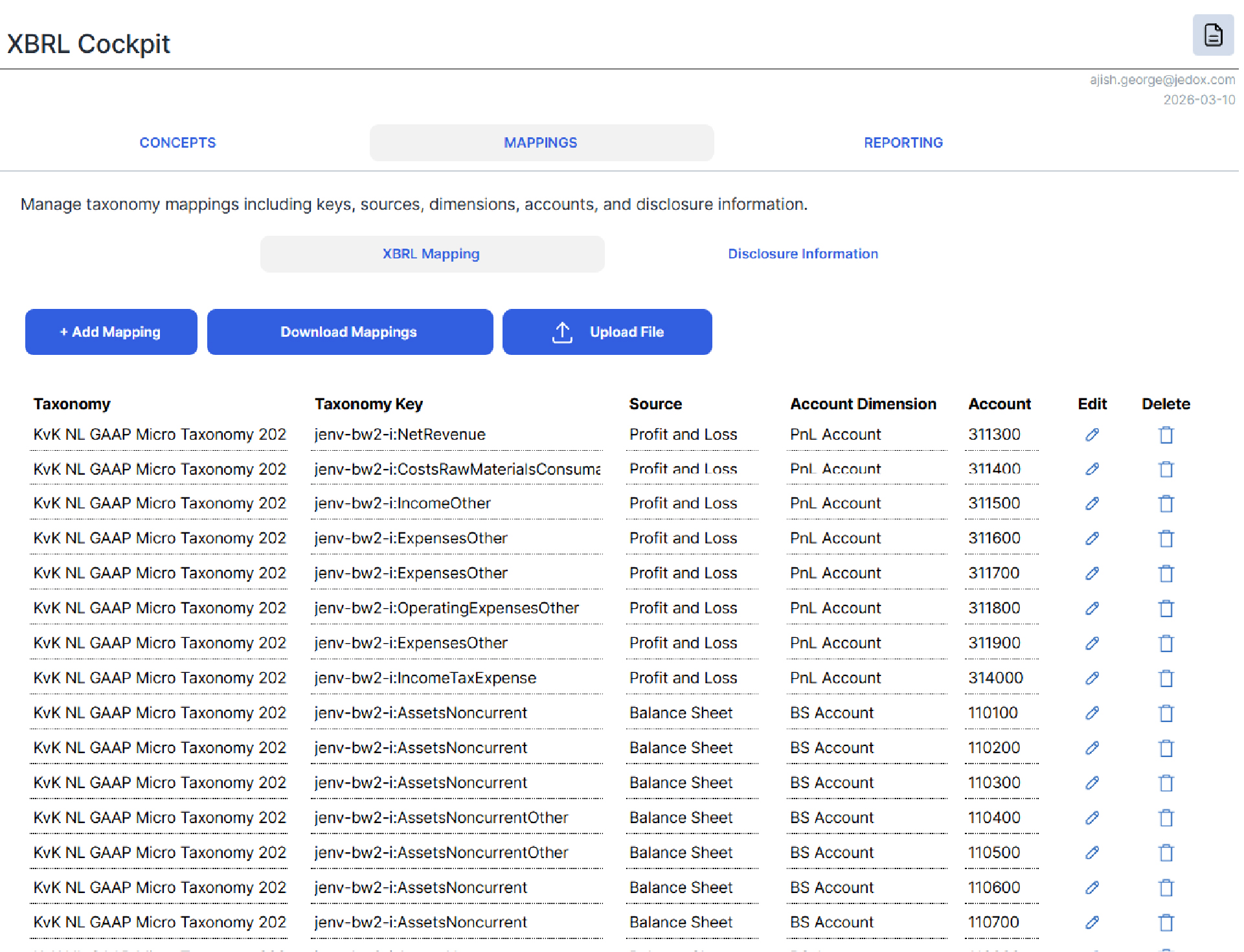
Map your existing chart of accounts to XBRL tags directly in Jedox or via Excel, whatever fits your process. Mappings from previous reporting periods can be reused across reporting periods, saving time in recurring cycles.
Capture of disclosure information
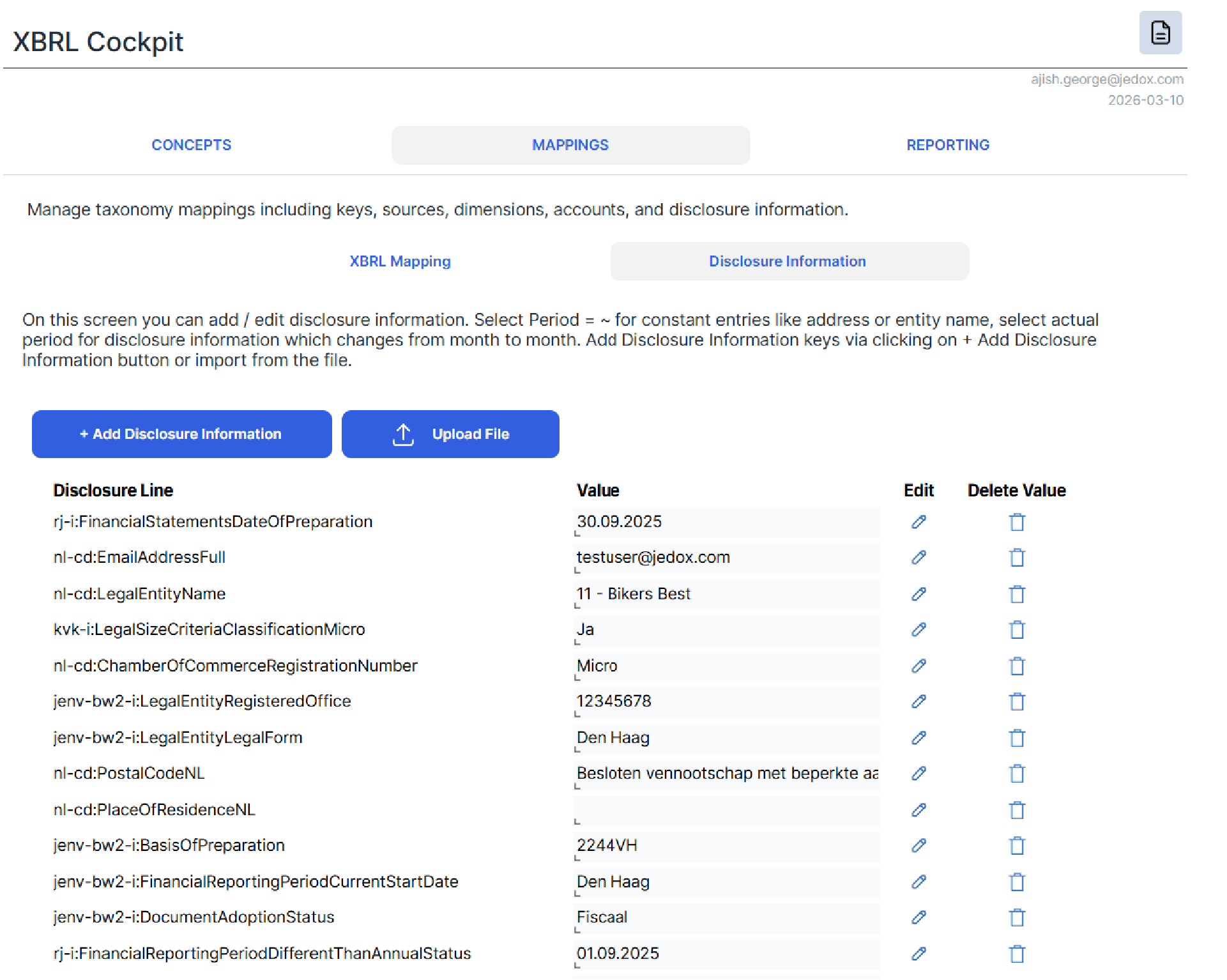
Go beyond numerical value alone by maintaining mandatory disclosures and explanatory text directly in Jedox, using freely editable fields or uploading them via Excel, just like in your mappings.
Fast XBRL and iXBRL creation with built-in validation
With a single click, Jedox transfers consolidated data to the Semansys XBRL engine, which is certified by XBRL International. Within minutes, you get:
- XBRL files
- iXBRL (Inline XBRL) files
- Detailed validation reports, including errors and warnings, which can be corrected directly in Jedox
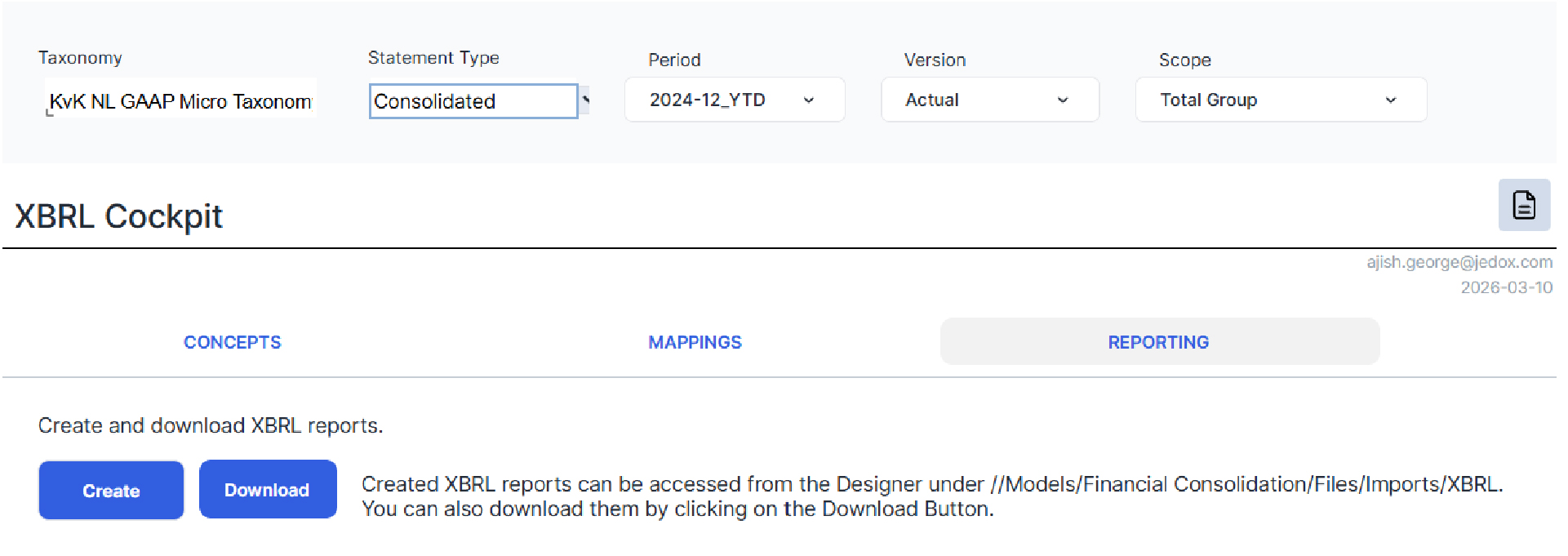
You can also choose between reporting for separate individual financial statements or consolidated group financial statements.
Seamless integration instead of tool switching
From taxonomy selection to final, validated reports, the entire process runs inside the Jedox financial close & consolidation solution. No exports or extra tools. Just one connected workflow.
Why Semansys: Trust and compliance as the foundation
XBRL reporting isn’t optional; it’s a regulatory requirement. And when errors can lead to penalties, accuracy and reliability matter. That’s why Jedox is partnering with Semansys, a established and trusted provider in the XBRL space.
Semansys brings:
- XBRL-certified technology
- SOC-compliant infrastructure
- Support for numerous international taxonomies
Together, Jedox and Semansys connect your consolidated financial data with regulatory compliance in one seamless process.

Use case: From consolidation to XBRL-reports in minutes
The challenge
Consider the following scenario: A company prepares its consolidated financial statements in Jedox FCCS. But the next steps are time-consuming and fragmented: manual data exports, transfers to external service providers, manual tagging, and multiple review cycles—processes that cost time and money and are error prone.
The new approach with Jedox XBRL reporting
With Jedox XBRL reporting, the Finance team stays in its familiar working environment and completes the entire reporting process in a few steps:
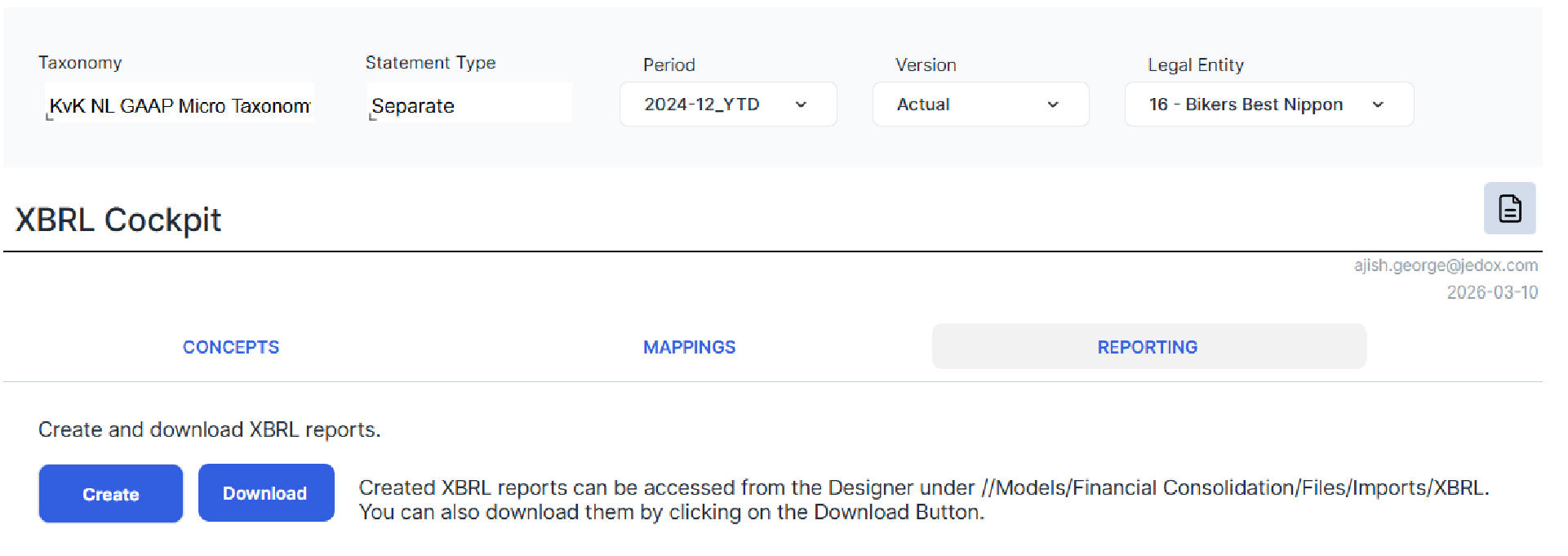
- Select the required taxonomy (e.g., ESEF)
- Define the mapping between XBRL tags and the chart of accounts, or reuse mappings from previous reporting periods
- Add required disclosure information
- Generate the XBRL and iXBRL report with one click by integrating mapped data into the Semansys XBRL engine
- Extract the XBRL or iXBRL report together with header information and validation reports, and review or adjust them directly in Jedox
- Submit the final XBRL report to the relevant regulatory authority
Your benefits
- Significantly shorter reporting cycles
Manual tagging and validation can take over 1,000 hours per year. With Jedox, XBRL reports are ready in minutes instead of weeks, so your team can move faster and focus on higher-value work. - Noticeable cost savings
External XBRL service providers often cost between €30,000 to €60,000 annually. By bringing the process in-house and automating key steps, you significantly reduce reporting costs. - Higher quality and lower risk
Fewer manual steps mean fewer errors. Built-in validation rules ensure consistency and accuracy, while detailed reports help you resolve inconsistencies before submission, thus reducing the risk of penalties incurred from incorrect filings. - Greater transparency and confidence
A fully automated and integrated workflow improve traceability and keeps your data consistent. Standardized, structured reports make it easier to meet regulatory requirements and build stakeholder trust.
For group accountants and CFOs, this means more control over the disclosure process and far less operational risk.
Who is XBRL reporting designed for?
This solution is built for Finance teams that handle regulatory reporting and want a more efficient, controlled process, including:
- Publicly listed companies
- Group accountants and accounting teams responsible for regulatory financial reporting and disclosure
- CFOs and Finance leaders focused on efficiency, compliance, and cost control
As an add-on to the Jedox Financial Close & Consolidation Solution, XBRL reporting can be activated at any time, extending your existing setup without disruption.
From close to disclosure, all in one place
With integrated XBRL reporting, Jedox brings financial consolidation, disclosure management, and regulatory reporting together in a single workflow. No handoffs, no disconnected tools. Just one consistent and integrated process from close to final submission.
The result is clear: less complexity, higher data quality, faster reporting cycles, and lower costs. Want to see it in action? Talk to your Jedox contact or schedule a live demo of Jedox XBRL—powered by Semansys.
What is XBRL (eXtensible business reporting language)?
XBRL, or “extensible business reporting language,” is an open, global standard that anyone can use free of charge. It serves to standardize and streamline the flow of corporate information from the information provider (e.g., reporting companies or individual business units) to the information recipient (e.g., financial and tax authorities, banks, regulatory agencies, stakeholders, and investors).
How does XBRL work?
In XBRL reports, the data contained within them is assigned unique, standardized tags. These tags precisely describe which financial metric is being referred to and the context in which it appears (e.g., which company and which time period).
This is based on a so-called taxonomy, which functions like a set of defined rules or a dictionary. It defines all relevant terms and their relationships to one another. Companies map their financial data to these terms and use this to create an XBRL document that contains both the data and its meaning.
What are the benefits of XBRL?
The benefits of XBRL include the elimination of media breaks, improved data quality and lower error rates, better comparability and compliance with regulatory requirements, and more cost-effective and faster than manual processes.
What are the main applications of XBRL?
The main applications of XBRL include financial reporting and annual financial statements, as well as annual financial reports in accordance with ESEF (european single electronic format). They also include sustainability reporting (e.g., ESG/CSRD) and the disclosure of information to regulatory authorities, such as banking regulators, stock exchange regulators, and investors.