
Beyond the traditional S&OP process: Lessons on real IBP
Markets are moving fast, complexity is rising, and planning cycles that once felt “good enough” are now holding organizations back. In our recent webinar, “Planning for impact: How companies succeed with real IBP”, we brought together globally renowned Finance experts to explore a simple but critical question: How do companies move from planning as an exercise to planning that actually drives better decisions and business impact?
Rather than focusing on theory, the panel shared practical perspectives from the field: what’s broken in traditional sales & operations planning (S&OP), why integrated business planning (IBP) is gaining momentum, and what it really takes to make it work.
Here are a few key insights from our conversation with Anders Liu-Lindberg of the Implement Consulting Group, Filip Devisch of NX Partners, and Nicolas Bleret of D’Ieteren Automotive.
From S&OP to IBP: The natural next step in connected planning
S&OP plays an important role in many organizations. At its best, it helps align supply and demand through regular cadence and reduces last-minute surprises. But as our webinar moderator Eren Koont, VP of Marketing at Jedox, explained, many S&OP processes struggle to deliver real business impact.
Too often, organizations focus heavily on volume and operational metrics and involve Finance late in the process, which can lead to difficulties connecting plans to broader business goals. The result is familiar to many teams: a plan that looks good on paper but doesn’t fully support decision-making when conditions change.
What really changes with integrated business planning
IBP takes the S&OP process a step further; not by adding more meetings, but by changing how planning works across the organization.
At its core, IBP must:
- Fully integrate Finance from the start
- Connect short-, mid-, and long-term planning
- Create clear executive ownership and accountability
As Koont summarized during the session, IBP is ultimately about “connecting all the planning horizons, including the strategic horizon, and really aligning both the operational drivers and financial results.” The shift sounds simple, but, in practice, it requires organizations to confront one of the most persistent barriers to better planning: silos.
Why silos still block impact
According to Anders Liu-Lindberg, a Partner at the Implement Consulting Group, the biggest issue isn’t that individual planning processes are poorly executed. It’s that they don’t connect.
“I think the biggest challenge that we see is that planning still happens in silos,” Liu-Lindberg shared. “Sales and operations planning will do its thing, Finance will do its thing, HR will do its thing, and so on. And these plans rarely connect.”
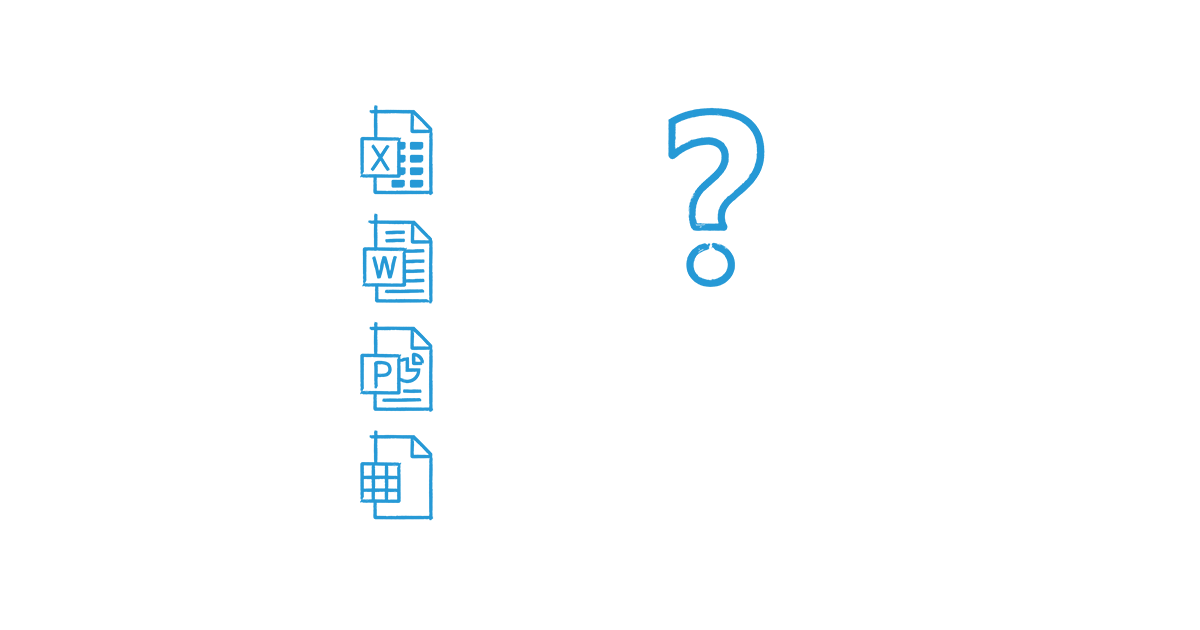
And when plans live in isolation, agility suffers. Teams may align numbers in the end (with what Liu-Lindberg dubs “a little bit of Excel spreadsheet magic”), but that doesn’t translate into how the business actually operates. In the short term, that kind of reconciliation can work, but over time, it creates fragility. When alignment depends on individual effort instead of a connected process, it becomes hard to repeat, scale, or adapt. What works once under pressure doesn’t build a resilient planning foundation.
For Liu-Lindberg, the real opportunity lies in cross-functional planning. “When functions plan together as one connected ecosystem, that’s when they start seeing the benefits”, he explained.
Turning decisions into action: The execution gap
Even when cross-functional discussions happen, another challenge emerges: translating decisions into concrete, trackable actions.
Filip Devisch, Strategic Financial Lead at NX Partners, sees this issue frequently in practice. “It’s the translation of the outputs of the discussions [and] the decisions that the business departments are making [. . .] translating it into measurable, tangible actions,” he shared.
That translation matters because FP&A teams are then expected to track progress, explain variances, and support follow-up decisions. Without clear actions, planning becomes retrospective rather than forward-looking. IBP helps close this gap by embedding financial logic, or “financial grip”, into operational discussions. So, decisions aren’t just agreed on, but owned, measured, and revisited.
A real-world perspective: Complexity at D’Ieteren Automotive
These challenges can become even more pronounced in complex organizations. For example, Nicolas Bleret, Head of Controlling at D’Ieteren Automotive, shared how siloed planning limits decision-making in a business spanning vehicle imports, retail operations, financial services, and emerging mobility solutions.
“We were working in silos,” Bleret said. “And it prevented the company from making the correct business decisions.” Financial figures were largely treated as a Finance exercise—useful but disconnected from commercial decision-making. By breaking down those silos and using financial insights to support decisions across the value chain, the organization saw a clear opportunity to improve both short- and long-term outcomes.
To dive deeper into exactly how D’Ieteren approached this challenge and what they learned along the way, see Bleret’s full story in the webinar.
What IBP delivers and why Finance should lead
When IBP works, the impact goes beyond smoother planning cycles. During the webinar, Koont referenced industry research from McKinsey showing that mature IBP organizations often see higher profitability, lower costs, and improved service levels. And the panel emphasized that the real value lies in better decisions made earlier.
Done well, IBP creates a single source of truth that allows teams to work from the same data, assumptions, and insights. That shared foundation increases confidence and reduces time spent reconciling numbers. In this environment, Finance plays a different role.
As Koont put it, Finance can act “as a catalyst for value creation,” moving beyond reporting, to support confident choices. That includes reconciling scenarios to the P&L, testing gaps against targets, and driving action when plans don’t align with outcomes.
From process improvement to real transformation
Technology and AI support the shift from disconnected planning to stronger S&OP and, ultimately, to integrated business planning. Automation reduces manual effort, scenario analysis becomes faster, and insights arrive when they’re needed. But tools alone don’t create integration.
The real change is about mindset, ownership, and cross-functional accountability. Moving from siloed planning to connected S&OP—and from there to IBP—requires deliberate change management.
As Bleret noted, while “it takes time and energy, it’s worth it.” Because IBP isn’t a replacement for S&OP. It’s the next step in strengthening and connecting it, and that journey requires more than technology.
IBP is a journey: Are you ready to begin?
One theme came through clearly in this discussion: IBP isn’t a switch you flip, it’s a journey you take. Organizations don’t need to get everything right on day one. But they do need to commit to breaking down silos, involving Finance earlier, and aligning planning with decision-making.
If you’d like to go deeper, the full webinar provides:
- A detailed look at D’Ieteren Automotive’s IBP journey
- Practical perspectives and insights from Finance leaders and advisors
- Tips on how organizations can move their S&OP planning process toward real, value-driven IBP
Watch the full webinar now to explore how your planning can start delivering real impact.